
REAL CASES
Organisations that chose the method.
Each case tells a specific problem, the approach taken and the result achieved.
1
Contesto
In the workshop dedicated to adaptable wood-based residential systems, Ecologia Organizzativa was used as an operational device to enable diverse actors to collaborate on a complex topic.
Within the "Wood be the future" programme promoted by Scandurra Studio, designers, companies, and researchers were invited to work on "inhabited wood" as an infrastructure for contemporary living.
Around wood, cultural resistances, risk concerns, and organizational models still tied to a linear supply chain converge.
The workshop's goal was to transform this web of constraints and possibilities into a shared, concrete, and project-oriented working field.
2
Il metodo: Ecologia Organizzativa
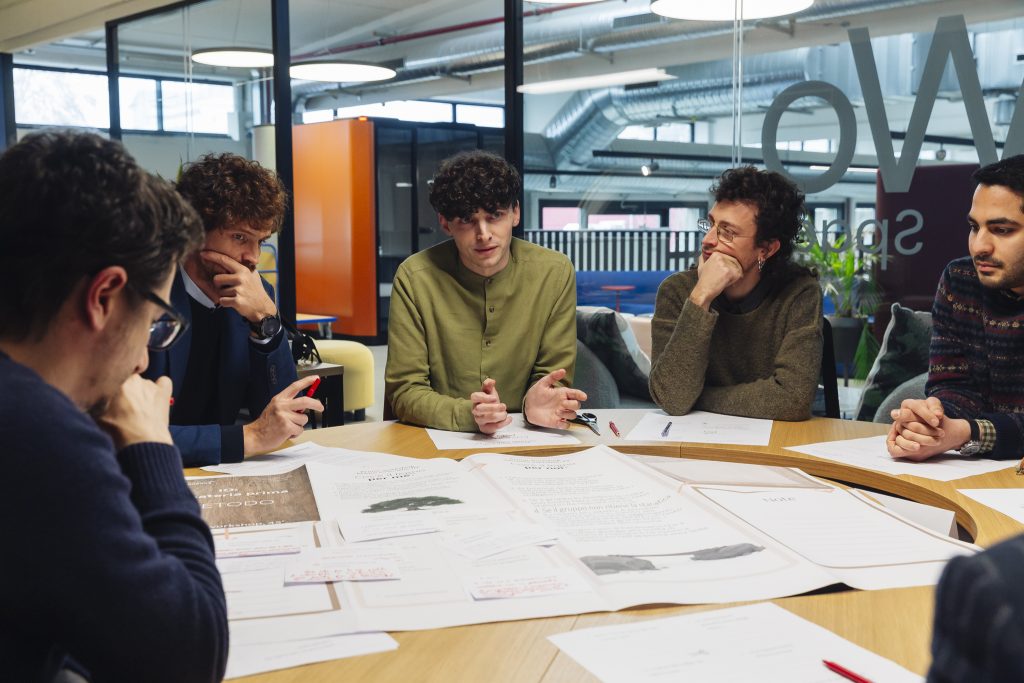
Ecologia Organizzativa created a "low-tech" working environment with high relational intensity, where the group itself became the real technology.
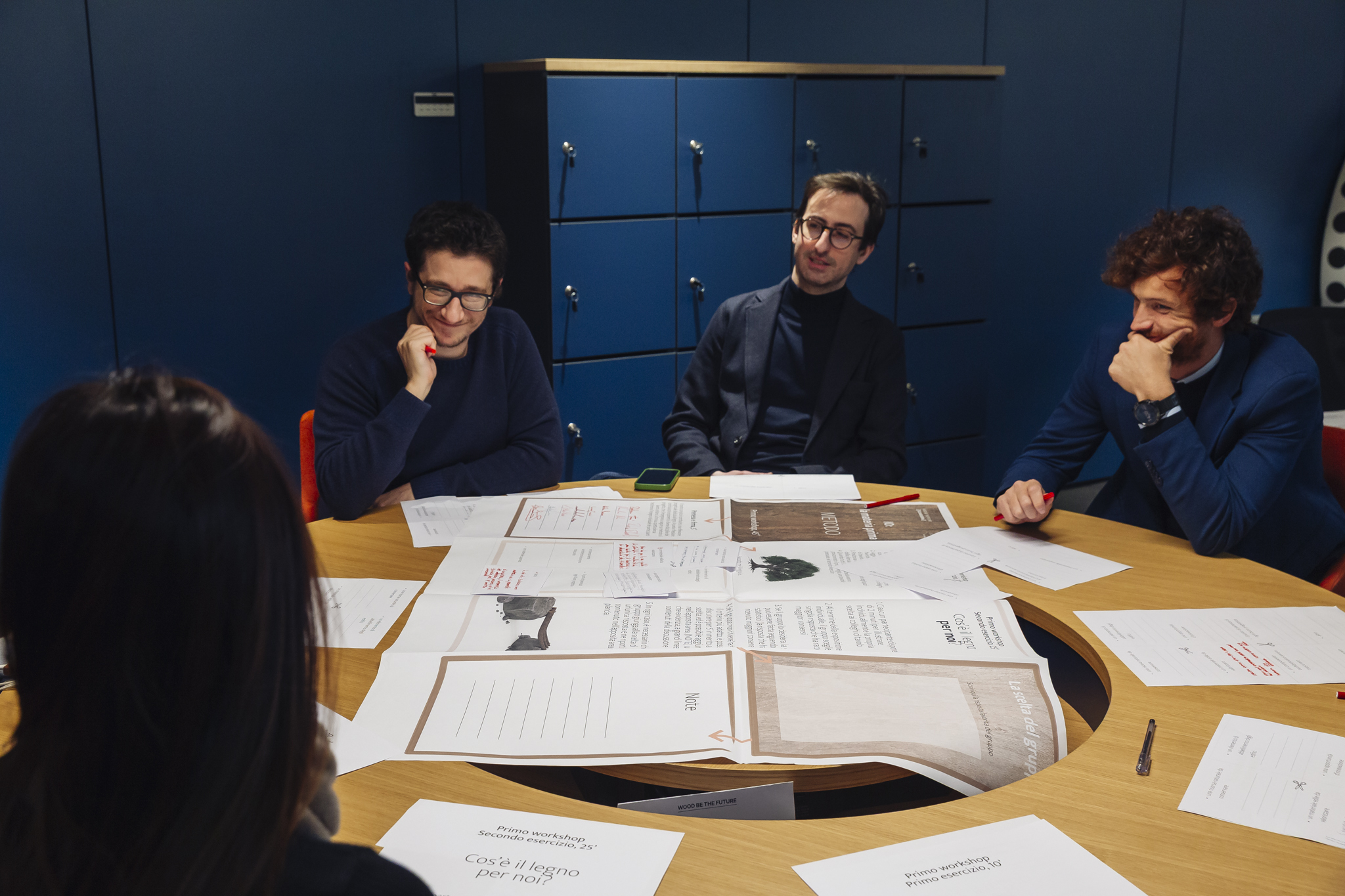
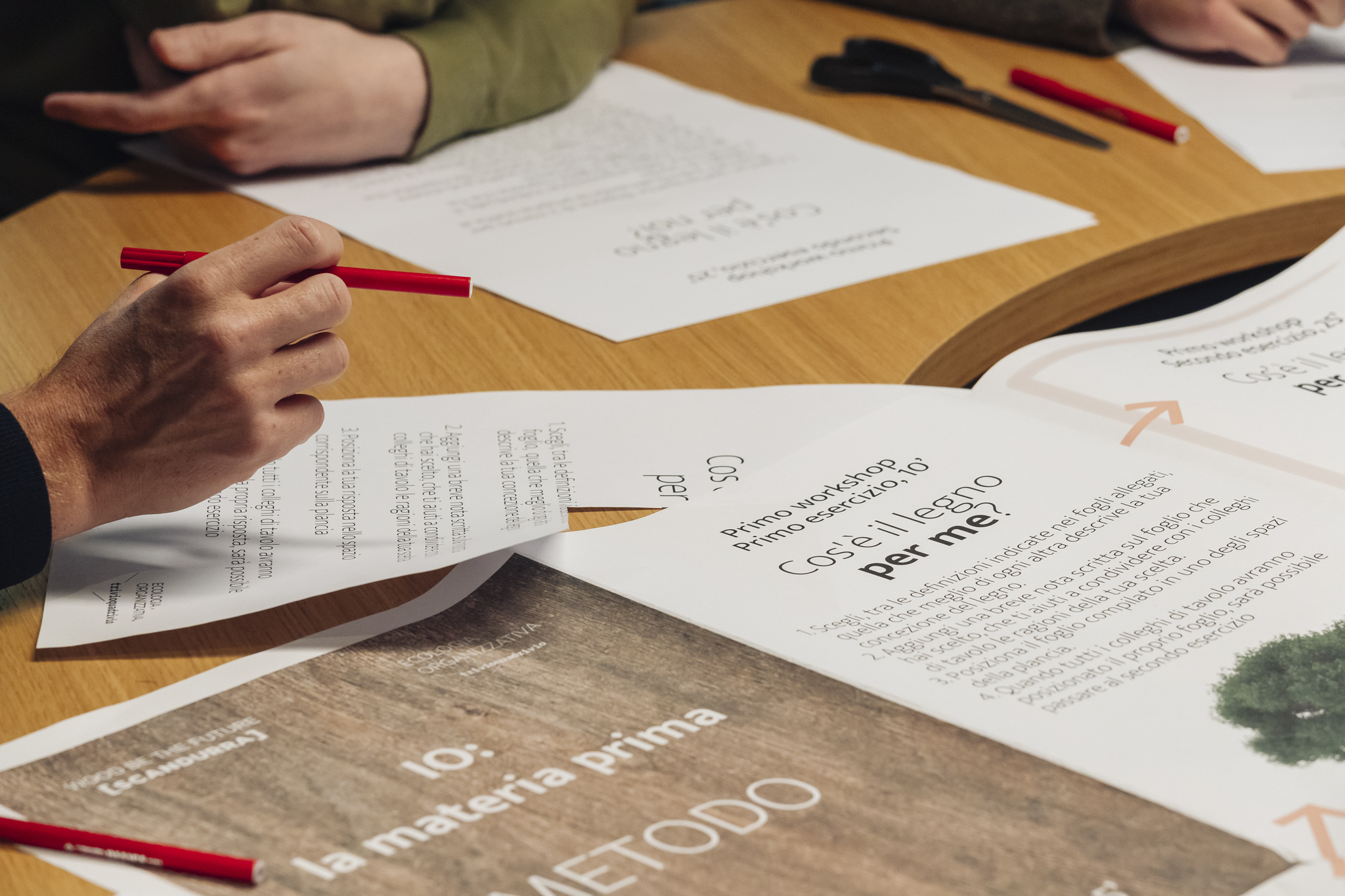
Participants worked around physical tables, with analogue materials, hand-drawn diagrams, and maps built in real time. The absence of digital mediation fostered attention, listening, and decisions made through direct exchange.
The process was not hierarchical but generative: a few clear rules, a minimal shared structure, and the possibility of unexpected connections emerging between skills, roles, and responsibilities.
3
Svolgimento
The workshop transformed implicit obstacles into explicit working material, ultimately producing shared scenarios and initial design configurations.
At the outset, obstacles and fears were brought into focus: perceived risk, regulatory uncertainties, fragmented expertise, market inertia. These elements were placed at the centre of the table — not hidden — and reframed as design data.
The group then built a common vocabulary around "adaptable wood-based residential systems", clarifying technical, cultural, social, and economic dimensions. This step aligned languages and expectations, reducing ambiguity.
In the central phase, mixed subgroups developed scenarios, guiding principles, and initial configurations for wood-based living systems. Clear constraints — defined timeframes, visual outputs, reasoned choices — contained dispersion and channelled creativity.
The plenary restitution integrated the various contributions into an overall vision, revealing a readable map of relationships and responsibilities within the "inhabited wood" ecosystem.
4
Risultati
The application of Ecologia Organizzativa produced a cultural, operational, and relational shift in the way work on wood was approached.
On the cultural level, the group recognised and reframed its own resistances, transforming fears and uncertainties into variables to be managed rather than implicit reasons for postponement.
On the operational level, shared guiding principles emerged for adaptable wood-based residential systems: criteria for flexibility of use, maintenance, reversibility of interventions, and compatibility with longer, more sustainable life cycles. Not a closed project, but a common foundation for future developments.
On the relational level, an operational understanding formed between actors who normally only meet at separate stages of the process. Designers, companies, and researchers experienced a collaboration where vertical expertise was interwoven from the start, not added after the fact.
5
Considerazioni conclusive
In this context, Ecologia Organizzativa proved effective in treating work on wood as an ecosystem rather than a simple technical supply chain.
The tool did not merely facilitate dialogue but made the complexity of the wood-living system readable, organising conflicts, interests, and competencies into a shared and reusable form.
The workshop produced not only ideas but a greater capacity to work together on a topic that demands an integrated vision.
The experience shows how, in a field of high uncertainty, the lever of innovation lies not only in technical solutions but in the way actors learn to cooperate.
Ecologia Organizzativa made it possible, in a limited time, to achieve a concrete advancement in the quality of collaboration around "inhabited wood", laying the groundwork for future developments founded on shared responsibility.
Risultato chiave
From linear supply chain to collaborative ecosystem: designers, companies, and researchers built a shared vision of wood-based living.